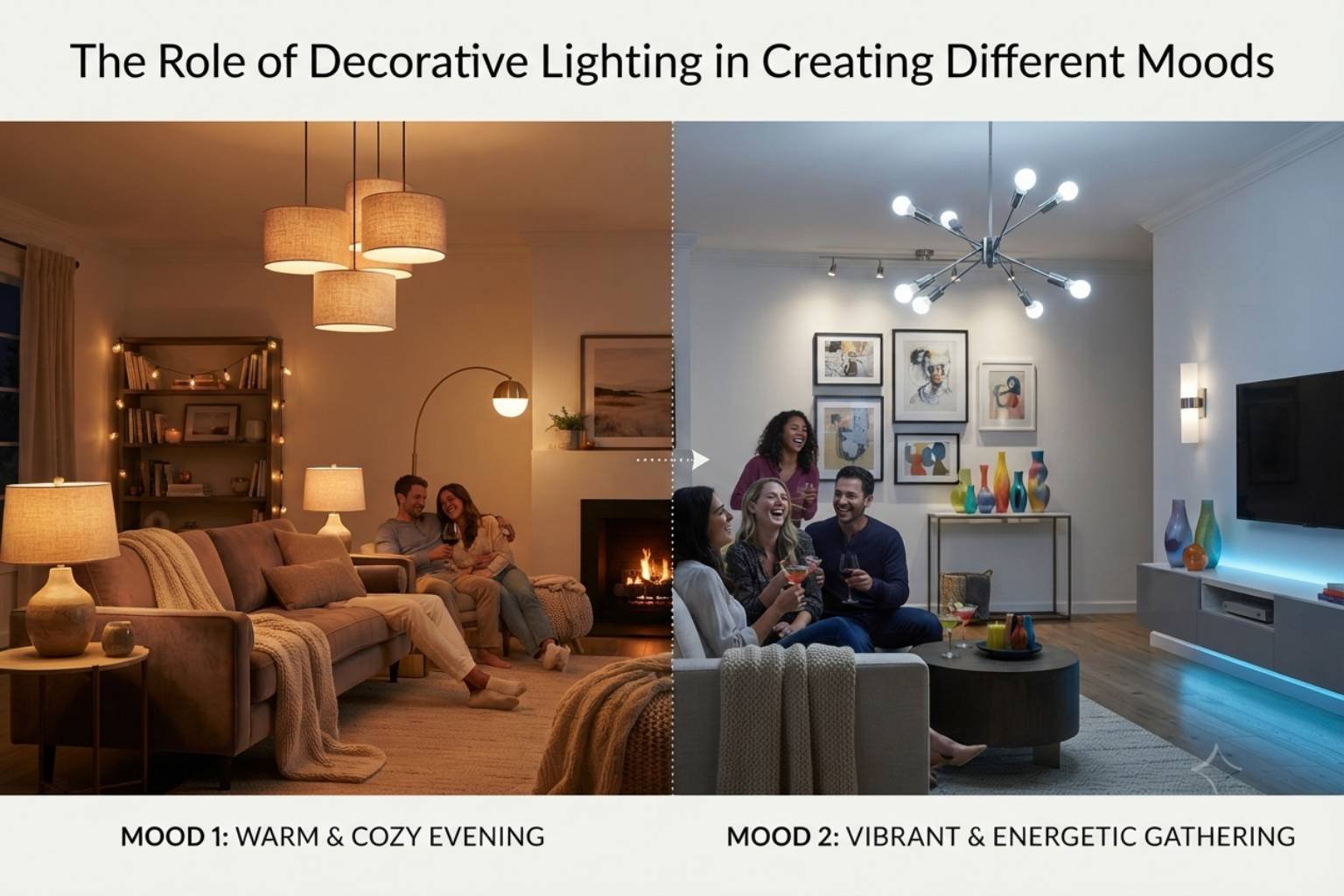
The Role of Decorative Lighting in Creating Different Moods
Lighting does more than illuminate a room. It is able to affect the way a space is experienced, the way colors are perceived and the way people engage with the environment. Lighting decoration is an added layer that provides both functional light and aesthetic appeal. Pendant lights, wall sconces, table lamps, chandeliers, and accent fixtures can all transform the atmosphere without necessarily making significant structural modifications.
In contrast to simple overhead lighting, decorative lights are design elements themselves. Their shape, location, intensity, and color temperature all play a role in the atmosphere of a room and can be used to make spaces feel relaxed, energetic, intimate, or elegant.
Create a Warm and Welcoming Atmosphere
An interior designer delhi ncr can use decorative lighting to make living rooms and entryways feel warmer and more inviting. Table lamps, soft pendant lights, and wall sconces can form pools of soft light that promote relaxation and conversation.
The use of warm-toned bulbs tends to be effective in areas that are meant to be comfortable. Multiple smaller light sources can also be used to produce more depth than a single bright ceiling light.
Make Dining Areas Feel More Intimate
Dining spaces benefit from lighting that brings attention to the table while keeping the surrounding room visually comfortable. A natural focal point can be made by a pendant light or chandelier placed above the table.
Select a lamp that fits the size of the table and ceiling. The use of dimmable lighting is especially helpful since it enables the mood to shift between sunny family breakfast and more relaxed evening dinners.
Encourage Focus in Work Areas
Workstations should be adequately lit to minimize eye stress and aid in concentration. Nevertheless, real-life lighting does not necessarily appear dull or utilitarian.
Task lighting can be accomplished with an elegant desk lamp, adjustable wall lamp, or directional pendant that also adds personality. Position lights to minimize screen glare and unwanted shadows for a more comfortable working environment.
Create a Relaxing Bedroom Mood
Bedrooms are supposed to be conducive to rest and decorative lighting can be significant in establishing a serene environment. An interior designer in delhi ncr may combine bedside lamps, wall sconces, and concealed lighting to create softer layers of illumination.
Do not use strong overhead fixtures all evening. Lower intensity warm light can help to provide a more relaxing atmosphere and help the process of transitioning between daytime activity and bedtime feel more natural.
Add Drama With Statement Fixtures
A dramatic chandelier or oversized pendant can completely transform a room. Statement lighting works particularly well in entryways, living rooms, dining areas, and rooms with high ceilings.
The light must match the room, not outshine it. Before selecting a visual dominant piece, consider the surrounding furniture, ceiling height, color palette, and architectural details.
Highlight Architectural Features
Ornamental lighting may focus on those things that should be outstanding. Wall washers, picture lights, spotlights, and hidden LED strips may highlight artwork, textured walls, shelving, niches or architectural features.
Strategic lighting establishes visual hierarchy and provides rooms with depth. Instead of illuminating every surface equally, focus light where it creates the greatest impact.
Use Accent Lighting for Personality
Accent lighting enables the homeowners to showcase personal style using well-chosen fixtures and visual elements. Sculptural lamps, decorative sconces, and lit shelves can be memorable components of an interior.
An interior designer delhi can coordinate these fixtures with furniture, artwork, and other decorative features. Repeating materials or finishes across lighting and furnishings can create a stronger sense of cohesion.
Change Moods With Color Temperature
The temperature of a light source and its color can have a powerful effect on the way a room feels. Cooler light can support alertness and concentration, while warmer light tends to create a relaxed atmosphere.
Various rooms can thus have different light temperatures. Brighter and cooler lighting can be applied to work areas, whereas warmer colors can be used in bedrooms, lounges, and dining areas.
Layer Lighting Instead of Using One Source
A properly designed room typically integrates ambient, task and accent lighting. Ambient lighting is used to give overall light, task lighting is used to assist in certain activities and accent lighting is used to emphasize visual features.
Using several layers makes a room more flexible. Instead of having a single setting, homeowners are able to regulate the lighting based on the time of the day, activity, or the mood they want.
Consider Scale and Proportion
Decorative lighting should be appropriately scaled to the room and surrounding furniture. A tiny pendant can disappear in a large space, while an oversized fixture may overwhelm a compact room.
An interior designer in delhi can help determine suitable fixture sizes, hanging heights, and placement based on the dimensions of the room. Adequate proportion makes lighting purposeful and harmonious.
Conclusion
Ornamental lighting can determine the nature of a whole interior. Proper fixtures can help make rooms cozy, intimate, energetic, focused, or sophisticated and also emphasize furniture and architectural features. When carefully integrated into the overall design, decorative lighting becomes more than a source of illumination; it becomes an essential part of how a home feels.
Ready to Transform Your Space? Let’s Create Something Exceptional.