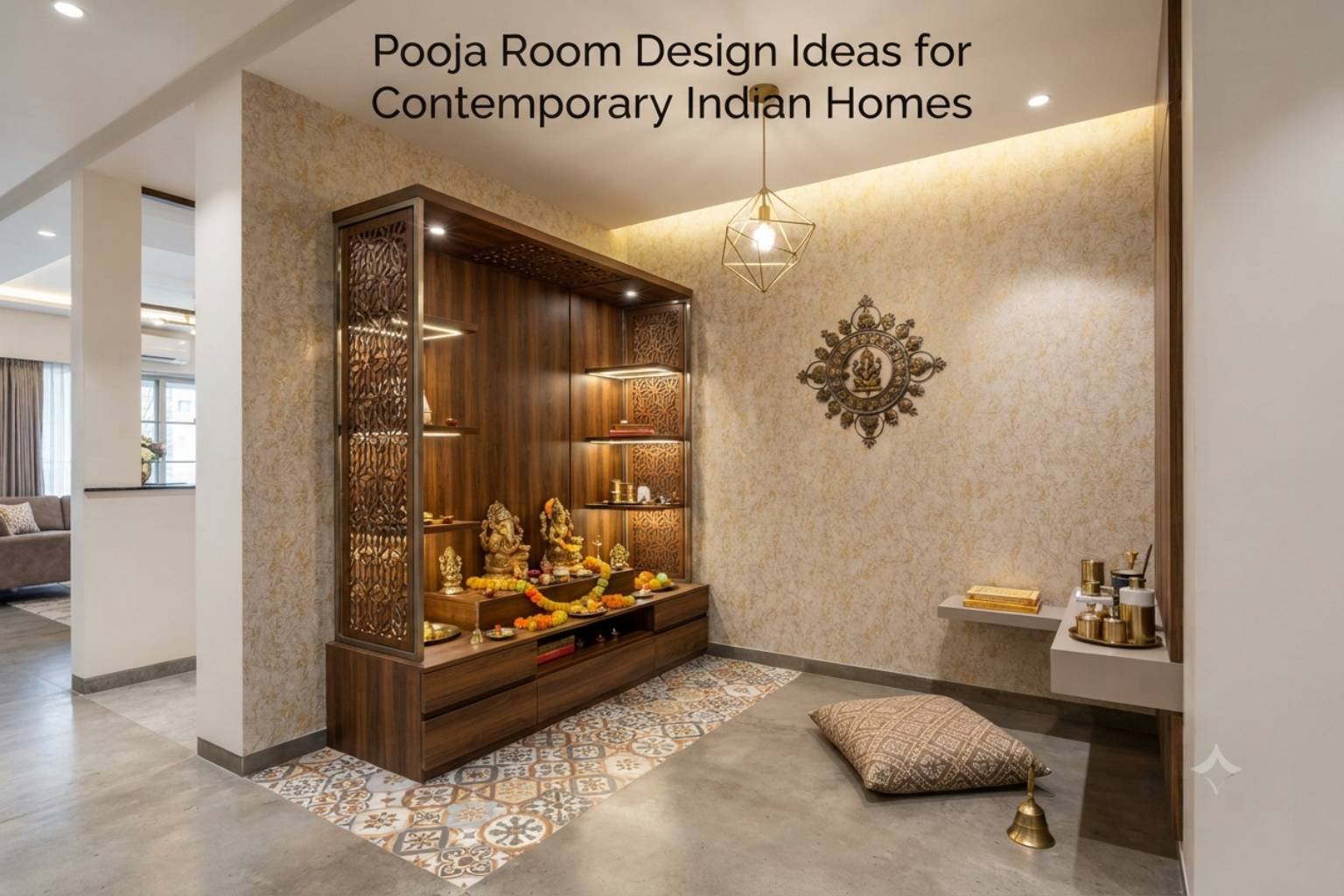
Pooja Room Design Ideas for Contemporary Indian Homes
A pooja room is a meaningful part of many Indian homes, offering a dedicated place for prayer, reflection, and family traditions. Modern houses tend to be small, and the task is to create a quiet spiritual niche without creating the impression that it is not a part of the interior. Considerate design can incorporate classic features with contemporary materials, convenient storage, and sleek lines.
An interior designer in delhi can help homeowners plan a pooja space that feels serene, functional, and naturally integrated into the home’s overall design. Whether it is the selection of the appropriate place or the control of lighting, ventilation, and storage, every choice can make the space more harmonious.
Choose the Right Location
An interior designer delhi ncr has the ability to assess the available space, privacy, natural lighting, and movement patterns and then choose the most suitable place to locate the pooja room. Greater privacy can be offered in a separate room, whereas a niche can be designed to fit well in a smaller apartment.
Avoid placing the pooja area directly within a heavily used passage. A more tranquil spot, niche, or special part of the living room can help to make the space more serene, without restricting the area to daily rituals.
Blend Traditional and Modern Materials
A contemporary pooja room does not need to look completely traditional. A mixture of natural wood, marble, stone, glass, brass, and modern laminates can be used to give a sophisticated look and maintain cultural identity.
The use of wooden jaali panels, fluted glass, carved details, and subtle brass accents can add traditional influences without overwhelming the room. Repeating materials used elsewhere in the home can also create a smoother visual connection.
Create a Calm Color Palette
A peaceful and uncluttered environment can be achieved with the help of soft colors. The room can be given a classic base with cream, warm white, beige, muted gold, light wood, and earthy colors.
Flowers, textiles, artwork, and decorative accessories can still be used to incorporate traditional colors. Keeping the primary surfaces subtle allows these details to stand out without overwhelming the space.
Plan Lighting With Purpose
One of the most significant aspects of a pooja room is lighting as it determines the general atmosphere. The ambient lighting can be warm and the fixtures can be used to emphasize idols, shelves, artwork or decorative back panels.
Layers can be achieved by an interior designer in delhi ncr using concealed LED strips, pendant fixtures, recessed lights, and accent lighting. Dimmable options can also make the atmosphere more adaptable throughout the day.
Incorporate Practical Storage
A pooja room usually requires space to keep prayer books, incense, diyas, flowers, utensils and other necessities. These items may easily cause the area to appear cluttered without special storage.
Depending on the daily routine of the family, an interior designer delhi can include drawers, hidden cabinets, open shelves, and small compartments. Having the frequently used items close by simplifies rituals and makes it look organized.
Add Traditional Elements Carefully
Classical information may provide a modern prayer area with a more powerful sense of identity. Warmth and cultural richness can be added with brass lamps, bells, handcrafted accessories, carved panels, devotional artwork, and traditional fabrics.
The key is balance. A small number of well-chosen details tend to be more visually striking than covering all surfaces with ornaments. It is also important to leave sufficient breathing space between significant features to ensure a relaxed environment.
Prioritize Ventilation and Airflow
Ventilation is also a factor to consider because incense, diyas, and lamps may produce heat and smoke. Efficient airflow will keep things comfortable and may minimize the amount of residue on walls, ceilings, and surrounding surfaces.
Circulation can be enhanced by use of windows, open jaali panels, exhaust systems, and partially open partitions without exposing the room. The design should incorporate ventilation and not be an afterthought.
Make Small Pooja Areas Work
Not all houses are spacious enough to have a separate prayer room. A small wall niche, corner unit, or recessed area can offer a special area to do daily worship without taking up valuable floor space.
An empty area can be turned into a meaningful space with a floating platform, decorative back panel, compact cabinet, and focused lighting. Vertical storage is particularly useful where there is limited floor space.
Create Privacy Without Closing the Space
Even a pooja area that is located in a living or dining room can be distinct without the need to have a solid enclosure. A subtle boundary can be formed by wooden screens, sliding panels, curtains, decorative partitions, and partially enclosed niches.
An interior designer in delhi ncr can select a partition style that complements surrounding furniture and materials. Open or semi-transparent solutions will enable the passage of light and air and will offer a higher level of privacy.
Conclusion
A modern pooja room can be a perfect blend of spirituality, tradition, and modern design. Smart choices in location, materials, colors, lighting, storage, ventilation, privacy, and safety can create a peaceful space that feels naturally connected to the rest of the home. Whether you have an expansive prayer room or a compact wall niche, thoughtful planning can transform it into a meaningful and practical part of contemporary Indian living.
Ready to Transform Your Space? Let’s Create Something Exceptional.