Kids’ Room Design Ideas That Adapt as Children Grow
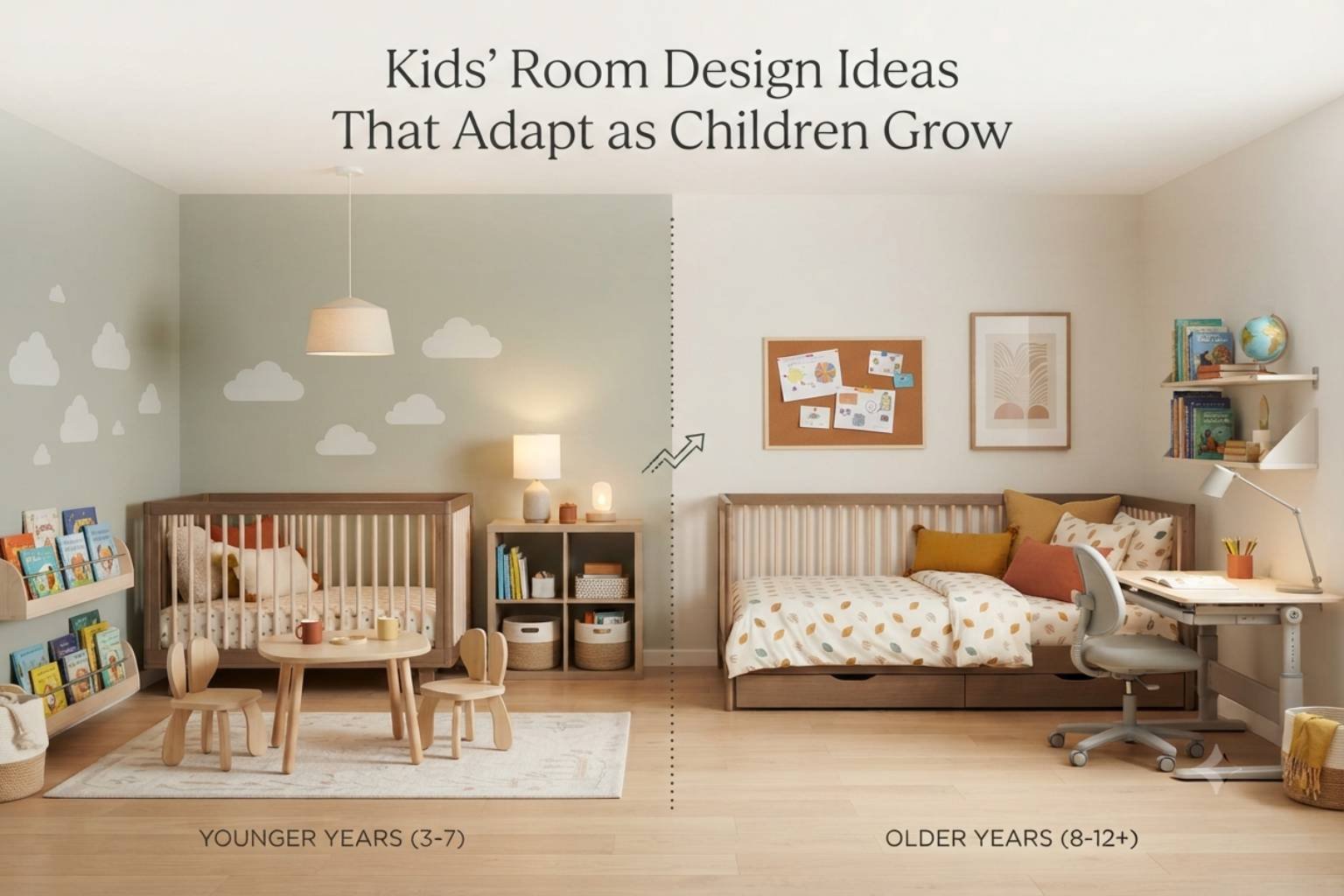
A child’s bedroom should be more than a colorful space filled with toys. It must change with the shifting interests, habits, school needs, and increasing autonomy. A toddler might require open space to play whereas a teenager might require privacy, study space, storage and self-expression.
An interior designer in delhi can help parents create a flexible room that changes naturally over time. The goal is to prevent designs that are easily obsolete and instead create a base that can support various childhood phases.
Start With a Flexible Layout
An interior designer delhi ncr can create a layout that leaves enough open space for different activities as children grow. Rather than cramming the room with age-specific furniture, emphasize on versatile areas that can be reconfigured.
A reading nook or study nook can be created out of a play corner. Having furniture that can be moved and clear pathways simplifies future adjustments without the need to redesign the entire layout.
Choose Furniture That Grows With Your Child
Furniture gets outgrown by children, and flexible furniture is especially useful. Adjustable desks, extendable beds, modular shelves, and adjustable chairs can be used over a few years.
Instead of buying furniture according to its age or fashion, choose furniture that is well-built and has classic designs. This will minimize the replacement costs and will simplify the room to update according to the needs.
Create Smart and Flexible Storage
Storage requirements change dramatically throughout childhood. Younger children might require easy access to bins to store their toys, whereas older children need space to store books, school supplies, sports equipment, clothing, and personal belongings.
An interior designer in delhi ncr can integrate wardrobes, open shelving, drawers, and under-bed storage into the room without overwhelming its available space. Adjustable storage systems are particularly handy since shelves and compartments can be rearranged as needs evolve.
Build a Dedicated Study Area
When children enter school and later advance to higher grades, a comfortable study space is even more crucial. The workspace must have adequate lighting, comfortable chairs, and space to place books and technology.
Do not plan the study space around very young children only. A basic desk and an adjustable chair with convenient storage can be used from elementary school up to the teenage years.
Use Color in Adaptable Ways
The taste of children is very volatile and therefore permanent themes or highly specific colors can make the room hard to change. Rather, establish a neutral base using walls, flooring, and large furniture.
Personalization may be in the form of bedding, artwork, rugs, curtains, cushions, and accessories. These are easily replaceable items because children grow to have different interests without having to overhaul the whole room.
Make Lighting Multifunctional
The room of the child requires various kinds of lighting at various stages and activities. General lighting is conducive to play and organization, whereas task lighting gains significance in homework and reading.
An interior designer delhi can combine ceiling fixtures, bedside lamps, desk lights, and accent lighting to create a flexible environment. Dimmable lights are especially helpful since they enable the room to be made less active at bedtime.
Plan for Greater Privacy
Children tend to appreciate personal space as they age. The room that was good in the early years of a child might require more privacy in the teenage years.
Think of curtains, room dividers, considerate placement of furniture, or a special dressing area where space is available. Privacy features must be part of the overall design and not seem like temporary features.
Design for Changing Interests
Children may change their interests to sports, music, art, technology or academic interests, instead of dinosaurs and dolls. Instead of permanently building the room around one interest, use removable décor to reflect current preferences.
Self-expression is offered by display boards, floating shelves, framed artwork, and rotating accessories. These features enable children to customize their rooms without sacrificing significant design elements.
Create a Comfortable Relaxation Area
A flexible bedroom ought to offer more than sleeping and studying areas. As children develop, they might desire a place to read, listen to music, chat with friends or just relax.
A small lounge chair, window seat, floor cushions or a small bench can make a comfortable retreat without taking up much space. The space can develop with the preferences of the child changing.
Encourage Independence Through Design
A room that is well designed can assist the children to slowly become more independent. Children can be more responsible for their space through accessible shelving, reachable storage, well-organized belongings, and age-appropriate furniture.
An interior designer delhi ncr can incorporate these elements while maintaining a cohesive design. As children grow, the room can shift from parent-managed organization toward a setup that supports greater independence.
Conclusion
A kids’ room should evolve alongside the child rather than becoming outdated every few years. The ability to adapt to the needs of the changing environment is facilitated by flexible layouts, versatile furniture, convenient storage, neutral bases, multifunctional lighting, and removable decoration. Growth-oriented design will result in a room that is useful at early childhood and throughout the teenage years without providing children with too much freedom to develop their personalities.
Ready to Transform Your Space? Let’s Create Something Exceptional.